How ISO 27145 Supports Cross-Border Diagnostics

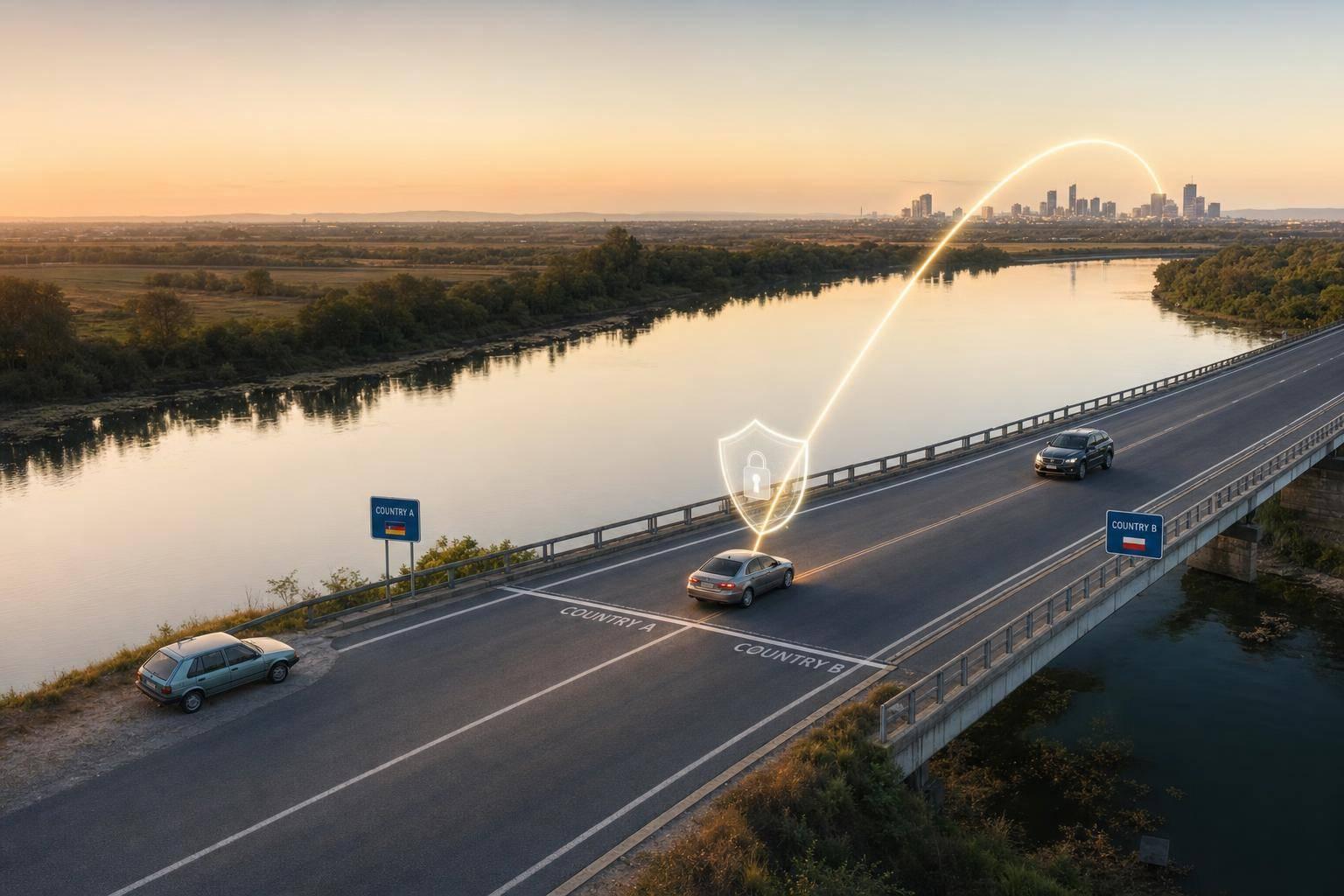
How ISO 27145 Supports Cross-Border Diagnostics
If you need one diagnostics workflow across many countries, ISO 27145 is the base standard to look at. I’d sum it up like this: it gives you shared data rules, shared message rules, support for both CAN and IP, and a cleaner way to move emissions-related diagnostics into one API model.
Here’s the short version:
- I see ISO 27145 as the common language behind WWH-OBD diagnostics across markets.
- It helps teams use one decoding model instead of separate country-by-country mappings.
- The parts that matter most are ISO 27145-2, -3, -4, and -6:
- Part 2: data dictionary
- Part 3: message dictionary
- Part 4: session and transport rules
- Part 6: test equipment support rules
- It works with UDS over CAN and IP, so the same core logic can support shop tools and remote systems.
- It cuts schema drift in multi-country platforms by keeping DTCs, VIN-linked records, monitors, and parameters in one structure.
- It does not remove OEM differences, mixed legacy fleets, DoIP network limits, or region-specific emissions rules.
A simple way to think about it: if your platform serves 50+ countries, you do not want 50 separate diagnostic schemas. You want one main model, plus a thin layer for country and OEM differences.
Diagnostic protocols and interfaces in Silver Scan Tool
sbb-itb-9525efd
What it means for me
When I read the article, the main takeaway is clear: ISO 27145 is less about “more data” and more about “the same data shape across borders.” That matters for fleets, repair networks, and API products that need to match diagnostic events to the right vehicle and return a stable response format every time.
The article also makes a practical point I agree with: the best setup is usually split into two layers:
- a protocol adapter for ISO 27145-3 message handling
- a normalization layer for ISO 27145-2 data mapping
That split keeps protocol logic away from API schema logic, which makes systems easier to maintain.
Where the article lands
If I had to boil the full piece down to one sentence, it would be this:
ISO 27145 helps you build one cross-border diagnostics pipeline, but you still need OEM testing, legacy support, network security, and country-rule mapping around it.
That’s the lens I’d use for the rest of the article.
How ISO 27145 enables harmonized diagnostics across countries
ISO 27145 sets shared rules for data, messages, and connections. Without those rules, each market needs its own custom mapping. With them, one workflow can work across multiple countries. Put simply, ISO 27145 turns cross-border differences into defined data and transport rules.
Common data and message dictionaries
The biggest win here is the shared dictionary layer. ISO 27145-2 and ISO 27145-3 define standardized data and message dictionaries for emissions-related data elements. That means software can use one decoding logic across markets instead of juggling separate setups for each region.
ISO 27145 also supports a single field for regional emissions categories, such as Euro and U.S. emissions tiers. So even when regulations differ by country, the data can still fit into the same structure.
Support for UDS over CAN and IP
ISO 27145 supports diagnostics over CAN and IP. That means the same workflow can work both in the shop and over networked connections. The transport layer makes it possible for the same diagnostic logic to run across shop tools and connected systems.
Alignment with international regulatory frameworks
ISO 27145 aligns with WWH-OBD, and its structure follows WWH-OBD rules used across markets. That connection is what allows the component standards to work across jurisdictions.[1][2]
Which ISO 27145 components matter most for integration
ISO 27145-2, -3, -4, and -6 do most of the heavy lifting for integration. They cover the data model, message handling, connection setup, and what test equipment has to support. In plain English, these are the parts that turn the standard into buildable rules for software, gateways, and test tools.
ISO 27145-2 and ISO 27145-3: data dictionary and message dictionary
ISO 27145-2 defines the common data dictionary: identifiers, units, scaling, and semantics for emissions-related and WWH-OBD parameters. This is the schema layer. It also maps legacy OBD parameter identifiers (PIDs), monitor identifiers (MIDs), and info type identifiers (ITIDs) into the WWH-OBD data model, so older parameter formats don't need separate handling.[4][8][9]
ISO 27145-3 defines the UDS message subset used to request and transport the Part 2 data elements.[7][13] Part 3 defines the request and response messages for the Part 2 data elements. That split matters because it lets back-end systems handle data normalization apart from protocol logic.
A practical backend setup is to run a protocol adapter service that knows ISO 27145-3 next to a normalization service that knows ISO 27145-2. The adapter takes care of session control, request building, and response parsing. The normalization layer turns raw byte values into typed, API-ready fields with units and metadata.
ISO 27145-4 and ISO 27145-6: connection setup and external test equipment requirements
ISO 27145-4 defines session setup, timing, and transport rules for UDS over CAN and IP.[5][6] For integration teams, this is the main reference for session orchestration: how to enter diagnostic sessions, deal with timeouts, and recover from negative responses.
ISO 27145-6 sets the minimum capabilities that external test equipment must support, including services, standardized identifiers, and timing behavior.[10][11] Compliant equipment must support both 11-bit and 29-bit CAN identifiers, use a fixed data length code (DLC) of 8 bytes in every diagnostic CAN frame, and be able to receive segmented data from up to eight WWH-OBD-related ECUs in parallel.[12] For multi-country deployments, that means less hardware sprawl. One compliant tool can work with WWH-OBD vehicles across markets without region-specific devices.
Those roles shape how diagnostic data moves into APIs, analytics, and service operations across multiple markets.
How automotive businesses and APIs can apply ISO 27145
ISO 27145-Aligned vs. Fragmented Diagnostics: Cross-Border API Workflow Comparison
Once the pieces are in place, the next step is putting them to work across different markets. That’s where ISO 27145 starts to pay off in day-to-day use: it can be turned into a repeatable data pipeline instead of a pile of one-off country rules.
Using ISO 27145 in diagnostic data pipelines
A practical ISO 27145-aligned pipeline usually moves through five stages: acquisition, message translation, normalization, enrichment, and API delivery. In plain terms, the system pulls in the diagnostic data, translates standard UDS messages, maps everything into one shared data model, adds context, and then serves it through an API.
At the center of this setup is a gateway service. It translates standardized UDS messages into a normalized data model while keeping DTCs, parameter identifiers, VIN, odometer readings, and timestamps tied to the right vehicle records. The big win is simple: country-level rules stay out of the core schema.
That’s what cuts maintenance work and makes expansion into new markets much less painful.
Dimension ISO 27145-Aligned API Workflow Fragmented Country-Specific Mappings Maintenance Effort Low; one global update High; separate updates per market Schema Consistency Uniform data and identifiers Inconsistent names and units Compliance Readiness Aligned with WWH-OBD rules Manual mapping for each market Scalability Add markets without schema changes Each market adds mapping logic Data Integration Single-schema REST integration Custom middleware per market
Why this matters for multi-country SaaS platforms like CarsXE
For multi-country platforms, the main upside shows up in the normalization layer. CarsXE already serves more than 50 countries through its vehicle data API suite, so ISO 27145-aligned normalization fits directly into that model.
By ingesting ISO 27145-conformant diagnostic inputs, CarsXE can normalize fault codes and readiness monitors into a stable schema linked to each vehicle’s VIN and registration data. The result is straightforward: a fleet operator in the U.S. and a repair network in Germany can hit the same endpoint and get diagnostics back in the same structure, with no country-specific setup.
That same consistency also improves the dependability of CarsXE's OBD Codes Decoder, which supports more than 3,000 codes for cars, motorcycles, trucks, and RVs [3]. When parameters are defined the same way across markets, DTC-to-repair mappings tend to be more accurate and much easier to maintain as usage grows.
Limits, implementation challenges, and key takeaways
Where cross-border diagnostics still gets difficult
In production, the biggest pain points usually come from OEM variation, older fleets, and transport-layer limits. ISO 27145 provides the framework, but OEM rollout still differs from one manufacturer to another. In the field, some manufacturers support only part of the data and message dictionaries, while others add vendor-specific extensions [19][21]. So even when a diagnostic tool sends the exact same request, two vehicles from different brands may respond in different ways.
Mixed fleets make things harder. Teams often need to support legacy OBD-II and OEM-specific diagnostics alongside WWH-OBD. That means dual decoding logic and APIs that can handle different versions cleanly. In the EU, all newly registered heavy-duty vehicles had to support WWH-OBD diagnostics starting in early 2014 [17][19]. But many older vehicles still in service may rely on proprietary tools and pre-harmonized parameter IDs.
DoIP adds its own set of problems for cross-border remote diagnostics. Its discovery process depends on subnet broadcasts, and those broadcasts do not cross subnet boundaries [16]. As a result, remote testers can lose visibility unless the network is set up to bridge that gap. DoIP also needs outside security controls. Without VPNs, firewalls, or certificate-based authentication, diagnostic channels are left exposed. On top of that, remote workflows have to deal with latency, packet loss, and dropped links [15][14], which can become a bigger issue when vehicles move across countries with different network conditions.
WWH-OBD also leaves room for regional emission cycles and emissions threshold limits. Monitoring can pause under conditions like extreme temperatures, low fuel, or high altitude [18][20][22].
Challenge Category Business Impact Mitigation Approach Implementation Consistency ECU behavior, timing, and negative response handling can vary by OEM and model Per-OEM conformance testing; maintain OEM-specific profiles Mixed Legacy Fleets Older and newer protocol stacks may need to coexist, including WWH-OBD, legacy OBD-II, J1939, and OEM-specific diagnostics Version-aware APIs; gradual phase-out strategy as fleet mix evolves DoIP and network security DoIP discovery is limited to the local subnet, and IP-based diagnostics need additional security controls Multi-protocol gateways; TLS, VLAN separation, authentication Regulatory Variance Fault thresholds and required parameters differ by region Regulatory mapping layer that tracks per-country requirements
Key takeaways for developers and automotive businesses
The standard works best as part of a larger diagnostic setup. ISO 27145 should be treated as the base layer, not the whole plan. In practice, that means pairing it with protocol-agnostic data models, tight conformance testing across OEMs and model years, transport-neutral infrastructure that supports both CAN and DoIP, and a regulatory mapping layer that tracks what each country requires.
For multi-country platforms like CarsXE, ISO 27145-aware pipelines help keep cross-market fault analytics and fleet dashboards consistent, even when the vehicles, networks, and rules don't line up neatly.
FAQs
Do all vehicles support ISO 27145?
No. Not all vehicles support ISO 27145.
You’ll usually find it in newer vehicles built to meet international diagnostic communication rules. Older vehicles, especially those made before the standard saw broad use, may not support ISO 27145 at all.
If you manage a mixed fleet, that can get messy fast. One group of vehicles may use one data standard, while older models rely on something else entirely. CarsXE can help you work across different data standards for vehicles of different ages, makes, and regions.
How is ISO 27145 different from UDS?
ISO 27145 is built for standardized, cross-border vehicle diagnostics, with a strong focus on the global exchange of emissions-related diagnostic data.
UDS is a general diagnostic protocol used for vehicle communication and ECU management. ISO 27145, by contrast, focuses on the diagnostic information needed for emissions compliance.
What do I still need beyond ISO 27145?
ISO 27145 sets the standard for vehicle diagnostics. But when vehicles move across borders, diagnostics alone often leave gaps. Teams still need reliable, real-time vehicle data to deal with local rules, missing records, and uneven data access.
CarsXE fills in those gaps with tools for VIN decoding, recall data, license plate decoding, vehicle history, title checks, lien records, theft records, and diagnostic code interpretation. Put together, these tools help teams keep workflows consistent, maintain clear audit trails, and meet regional safety and data rules.
Related Blog Posts
- Global Emission Standards: Compliance Guide
- International Standards for OBD Session Management
- How Authentication Enhances RBAC in OBD Systems
- OBD Code Diagnostics for Plug-In Hybrids