Regional Gas Prices and Hybrid Vehicle Demand

Regional Gas Prices and Hybrid Vehicle Demand
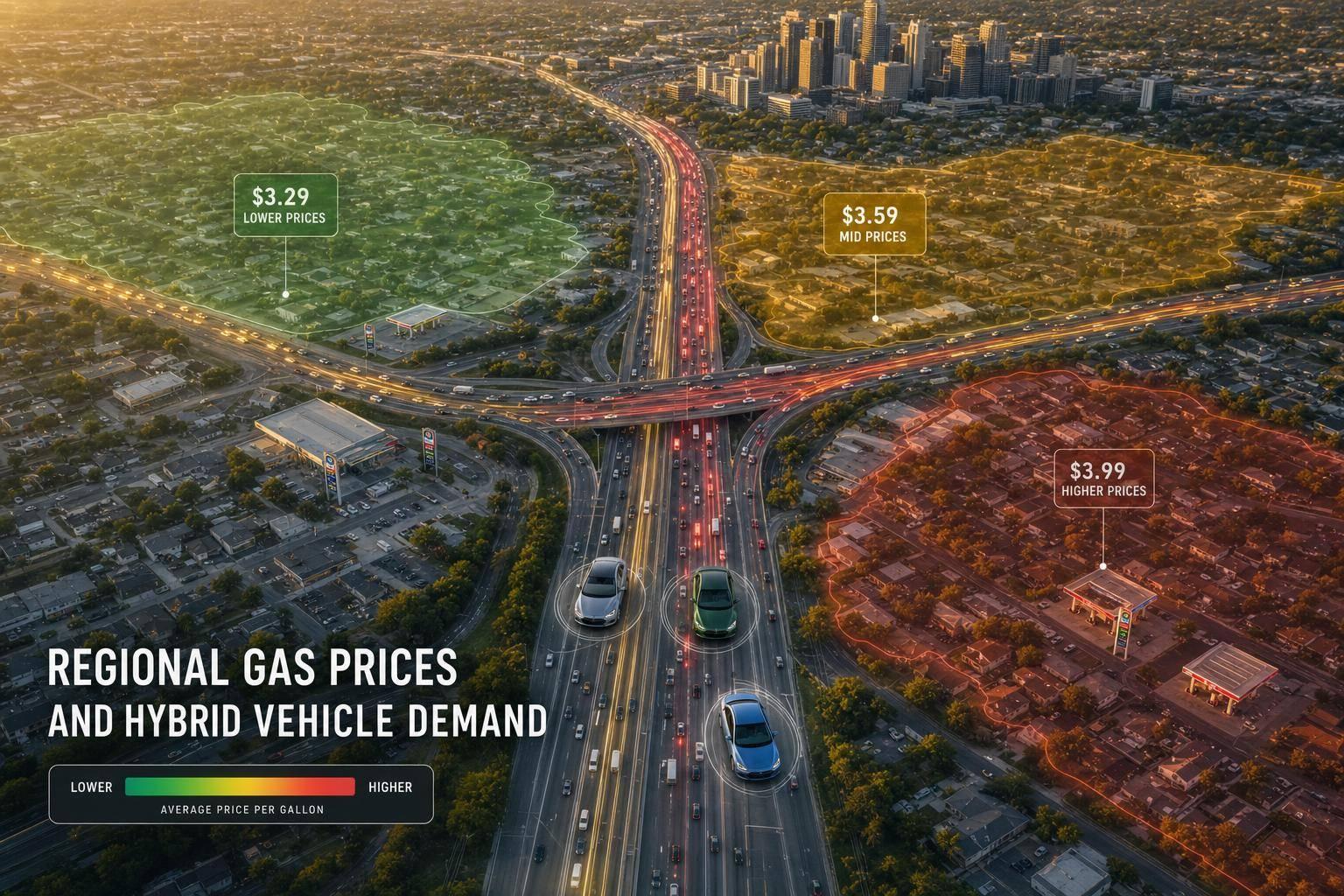
If you want to know where hybrid demand moves first, look at local gas prices - not the U.S. average.
I’d sum up the article like this: when gas stays high in one region, shoppers there often shift to hybrids sooner. That shift shows up first in search activity, dealer pricing, inventory pressure, and auction values. If I rely on national averages alone, I can miss where demand is building and send the wrong vehicles to the wrong markets.
Here’s the full point in simple terms:
- High local gas prices can push more buyers toward hybrids.
- Long commutes, traffic, and already-high pump prices make that shift stronger.
- Short spikes often lead to more shopping. Months of high prices are more likely to change what people buy.
- National averages blur local demand, so planning from U.S.-level data can miss early market shifts.
- That miss can hurt inventory mix, incentive plans, pricing, and lease value estimates.
- Region-level data from fuel prices, vehicle specs, market values, and auction activity can help teams act before the sales mix changes at the national level.
A few facts stand out:
- The article points to three local demand drivers: longer commutes, urban congestion, and higher baseline gas prices.
- It also shows four decision areas tied to region-level signals: inventory allocation, lease/finance offers, retail pricing, and segment targeting.
- Vehicle fields like
city_mpg,hwy_mpg,fuel_type,class_name,retail_avg, andresid36/resid48help turn fuel-price data into market actions.
Quick comparison
Approach What I’d see Main risk or result National-average planning Smoothed, slower demand signals Hybrids may be under-sent to high-cost markets Region-level planning Local fuel pressure and early pricing moves Better fit for allocation, pricing, and lease planning
Bottom line: if gas is $4.50+ per gallon in one metro and much lower in another, buyer math changes fast. That’s why region-level tracking matters more than broad averages when I’m trying to read hybrid demand.
How Higher Gas Prices Change Hybrid Buying Behavior by Region
Regional Fuel Price Gaps and Their Effect on Buyer Decisions
Regional demand shifts usually show up first in places where fuel savings are easy for buyers to figure out. When gas prices go up, hybrid demand tends to move fastest in areas with long commutes, heavy traffic, and high fuel costs to begin with. A driver stuck in stop-and-go traffic on a long commute burns more fuel than someone with a shorter trip on open highways. So when prices at the pump climb, shoppers in those areas can look at fuel economy numbers and make a pretty direct estimate of what they might save each month.
Three local factors tend to speed up the move toward hybrids when gas prices rise: longer commutes, urban congestion, and higher baseline fuel prices. When those three factors hit the same market at once, the case for buying a hybrid gets much easier to justify.
What Sales Data and Market Research Show During Fuel-Price Increases
Higher gas prices tend to push up hybrid searches and vehicle comparisons, especially in higher-cost regions. But the effect isn't the same everywhere. Local driving habits still shape whether that early interest turns into an actual purchase.
Why Sustained High Prices Matter More Than Short-Term Spikes
Short-term price jumps tend to drive more browsing. Sustained high prices change what people buy. When drivers keep paying higher prices at the pump for months at a time, fuel economy starts to matter a lot more in the final choice. For manufacturers, that kind of steady regional price pressure is the signal that counts for allocation. That's also why regional demand is hard to read from national data alone: browsing and buying don't always move together.
sbb-itb-9525efd
Gas prices driving a surge in hybrid, EV demand
Why Manufacturer Planning Often Misses Regional Demand Shifts
Regional vs. National Planning: How Gas Prices Drive Hybrid Demand
National-Average Planning vs. Region-Level Planning
A big part of the problem is simple: many planning systems still lean on national averages.
Most OEMs and dealer groups use national averages because the data is easy to pull into reports. But easy doesn’t mean useful. That approach can blur what’s happening on the ground, especially when fuel prices move unevenly from one region to another. If gas prices jump in one market but stay flatter in another, the national number can smooth over the change. The signal gets muted.
That matters because demand doesn’t shift everywhere at the same pace. A planning team that watches only the national average may not spot a hybrid demand spike building in higher-cost markets until it’s already obvious.
The gap shows up in three areas: inventory, incentives, and residual value.
Planning Factor National-Average Planning Region-Level Planning Data Source Lagging indicators and quarterly reports [1] Frequent API updates [1][2] Responsiveness Slow; reacts to past trends [1] Fast; identifies regional tipping points early [1] Inventory Fit Often misaligned with local demand Matched to regional fuel prices and buyer behavior
Inventory, Incentives, and Residual Value Risks
The effects of national-average planning show up pretty fast.
First, hybrids can be under-allocated in the very regions where demand is climbing. A dealer in a market with higher fuel costs may end up with too few hybrid models on the lot right when local shoppers are most ready to make the switch.
Second, incentive offers can fall flat. A one-size-fits-all national incentive doesn’t reflect how different a hybrid’s total cost of ownership can look in a high-price market versus a lower-price one.
Third, residual value models can go off track when they ignore regional market differences. A model that leaves out regional market adjustments can misprice vehicles in volatile fuel markets [2].
That’s why regional demand modeling matters so much for allocation, incentives, and pricing.
Data-Driven Ways to Forecast and Respond to Hybrid Demand
Once regional fuel swings are visible, the next move is simple: turn that signal into allocation and pricing calls.
Build Region-Level Demand Models Using Fuel Prices and Vehicle Specs
National averages can smooth over the very thing you need to see. Fuel prices move locally, so demand modeling should too.
Start by linking regional fuel prices to vehicle specs. Then join that data with attributes like city_mpg, hwy_mpg, and fuel_type. From there, estimate monthly fuel cost for a typical driver in each market and measure the monthly savings against a similar gas model. When that savings gap gets big enough, buyer behavior can change fast. Modeling demand at the ZIP-code or metro level helps you spot those local tipping points before they show up in broad national data.
Once the model shows where demand is building, vehicle-level data helps you decide which trims to move first.
Use CarsXE Data for Inventory, Pricing, and Valuation Analysis
After you have a regional demand signal, you need vehicle-level data to do something with it. That’s where CarsXE comes in. CarsXE’s Market Value API adds regional pricing data, and the Specifications API adds fuel type and efficiency attributes.
The Market Value API includes a regional_whole_xclean field that reflects regional price premiums. In plain terms, it can show where hybrid trims are already pulling higher prices in certain regions. Daily market value updates also let analysts react to fuel spikes faster [2].
For segmentation, the Specifications API lets you filter inventory by fuel_type, drivetrain, and class_name. That makes it easier to see which hybrid segments react most to fuel price changes in certain climates or terrains. Match the right hybrid segment to the right regional demand signal, and allocation decisions get a lot sharper [2].
Auction data is another signal many teams overlook. Tracking low, average, and high auction values for hybrid VINs can reveal rising wholesale demand before it appears in retail pricing [2].
Turn Analytics into Allocation and Pricing Decisions
Regional signals should shape inventory, pricing, and lease strategy, not just sit in a dashboard.
Decision Area Key API Attributes Signal to Track Inventory allocation regional_whole_xclean, fuel_type Rising regional price premiums on hybrid trims Lease/finance offers resid36, resid48, city_mpg Residual value movement in high-fuel-cost markets Retail pricing retail_avg, auction_values Wholesale demand moving ahead of retail pricing Segment targeting class_name, drivetrain Hybrid segments that respond differently by climate or terrain
A practical way to think about it: if wholesale hybrid values start climbing in one metro before retail prices move, that’s your early nudge to adjust pricing or send more of the right trims there. And if one hybrid class performs better in colder areas or hill-heavy markets, that signal can guide where those vehicles go first [2].
Conclusion: What Regional Fuel Volatility Means for Manufacturers
Regional fuel volatility does more than affect shopper interest. It changes allocation, pricing, and residual-value decisions. A national average can smooth over the exact moments when buyer behavior shifts in one market but not another [1]. And that’s where problems start. Manufacturers that rely on broad numbers can end up with the wrong inventory in the wrong places, plus incentives and residual values that miss the mark.
Fuel-price swings also make regional demand tougher to read. When that happens, quarterly reports often arrive too late to guide allocation and pricing in a useful way.
Key Takeaways for Product, Pricing, and Data Teams
The main change is simple: stop leaning on national averages and start using regional signals. Local fuel prices influence which trims move, which residual values hold up, and where incentives should be pushed. For product, pricing, and data teams, that means:
- Product teams should line up
city_mpgandhwy_mpgwith state fuel costs to spot the most price-sensitive hybrid segments [3][2]. - Pricing teams should include
statein every market value query so regional adjustments show up in the analysis [2]. - Data teams should monitor hybrid auction values next to regional market adjustments for residual-value and pricing analysis [2].
Regional fuel data, vehicle specs, and market values together lead to faster decisions. The data is already there. The edge goes to teams that move on regional signals first.
FAQs
Why do local gas prices matter more than the national average?
Local gas prices give consumers a more direct signal than the national average. A nationwide number can smooth over sharp jumps in one city or state, so it doesn’t always show what people are dealing with at the pump.
When prices climb in a given area, the effect hits fast. Commuters and families in that market have a stronger reason to put fuel economy near the top of their list, which can push up hybrid demand there.
For manufacturers, watching these local shifts can help with regional inventory and pricing decisions. Platforms like CarsXE can help by showing where supply should better match local buying behavior.
How long must gas prices stay high to change hybrid demand?
There’s no set timeline in the data for when high gas prices push buyers toward hybrid vehicles.
What matters more is watching regional shifts as they happen. Past fuel-price patterns, on their own, often fall short when you’re trying to predict what buyers will do now.
That’s where CarsXE API data comes in. It helps manufacturers spot demand turning points earlier, so they can make smarter calls on inventory and where to put their money.
What data should manufacturers track by region?
Manufacturers need to watch real-time regional fuel adoption data, especially the mix of gasoline, hybrid, diesel, and electric vehicles. That gives them a clearer read on local shifts as they happen. Instead of waiting on quarterly reports, they can react sooner and adjust production, inventory, and distribution based on what people in each region are buying.
The most useful inputs here include vehicle specifications and fuel types, regional market value, and recall or diagnostic data. With region-specific insights from CarsXE, manufacturers can line up inventory more closely with local demand and requirements.
Related Blog Posts
- Regional Vehicle Demand and Road Investments
- Regional Economies Shaping Car Brand Popularity
- Regional Vehicle Demand: Key Cultural Drivers
- How Regional Trends Impact Vehicle Resale Value